
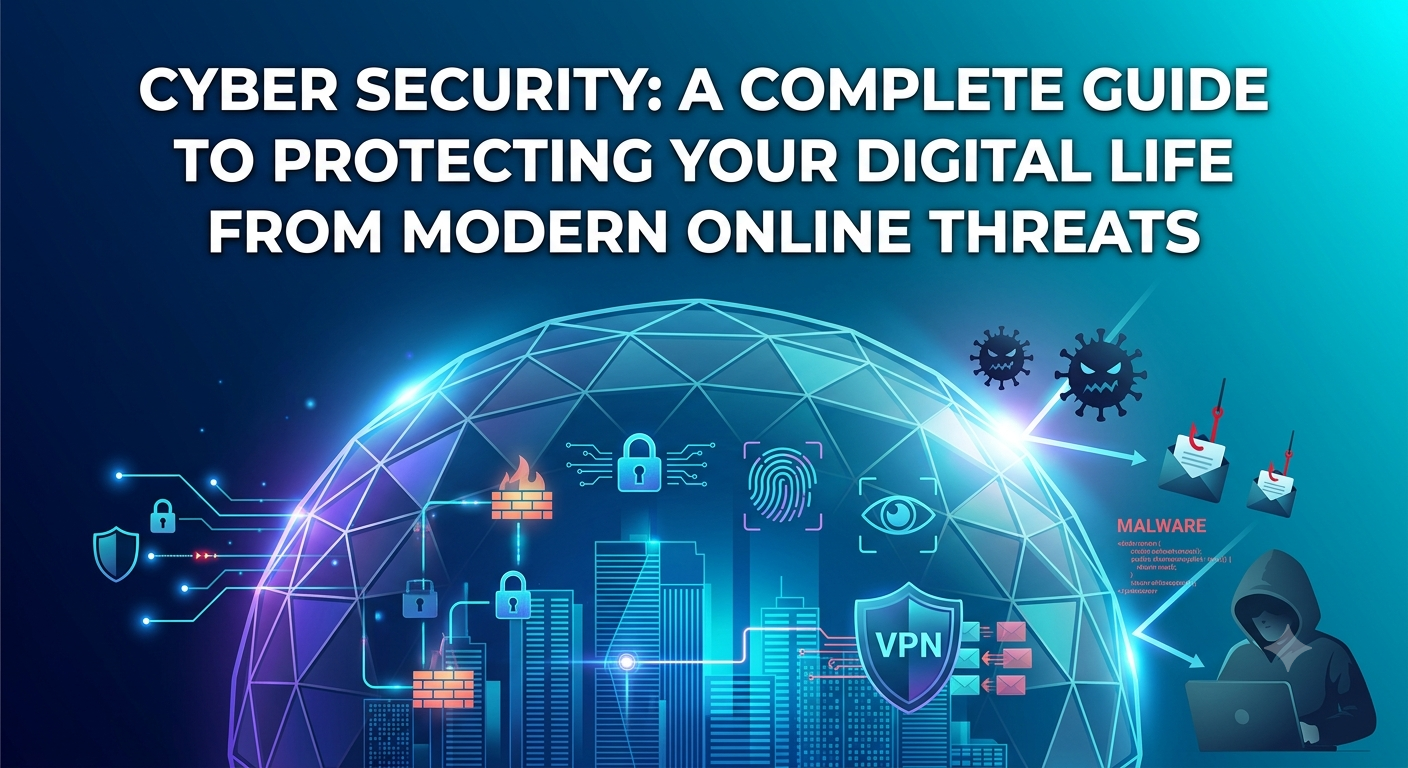
In today’s digital world, cyber security has become more important than ever. As people and businesses rely heavily on the internet for communication, banking, shopping, and storing valuable information, cybercriminals continue to develop new ways to steal data and disrupt online services. Cyber security is the practice of protecting computers, networks, applications, and sensitive information from unauthorized access, cyberattacks, and data breaches.
One of the biggest cyber security threats is phishing. Phishing attacks trick users into revealing personal information such as passwords, credit card details, or banking credentials through fake emails or websites. Malware, ransomware, and viruses are also common threats that can damage devices, encrypt important files, or steal confidential information. Strong cyber security measures help reduce these risks and keep digital assets safe.
Individuals can improve their online security by following simple but effective practices. Creating strong and unique passwords for every account, enabling two-factor authentication (2FA), regularly updating software, and avoiding suspicious links or downloads are essential steps. Installing trusted antivirus software and using secure Wi-Fi connections also provide additional protection against cyber threats.
For businesses, cyber security is even more critical. Companies store customer information, financial records, and confidential business data that can become targets for hackers. A successful cyberattack may result in financial losses, legal consequences, and damage to a company’s reputation. Organizations should invest in firewalls, encryption technologies, employee cyber security training, and regular security audits to strengthen their defenses.
Modern technologies such as Artificial Intelligence (AI) and Machine Learning (ML) are transforming cyber security. These technologies can quickly detect unusual activities, identify potential threats, and respond to attacks faster than traditional security systems. Cloud security, endpoint protection, and zero-trust security models are also becoming increasingly popular as organizations adapt to remote work and cloud-based services.
The future of cyber security will continue to evolve as cyber threats become more sophisticated. Governments, businesses, and individuals must work together to create a safer digital environment by adopting the latest security practices and staying informed about emerging risks.
In conclusion, cyber security is no longer optional—it is a necessity. Whether you are an individual protecting personal information or a business safeguarding valuable data, investing in strong cyber security measures is essential for maintaining privacy, trust, and digital safety in an increasingly connected world.